
[GHH] Sri Swami Chinmayananda’s mission and contribution to globalizing Hinduism.
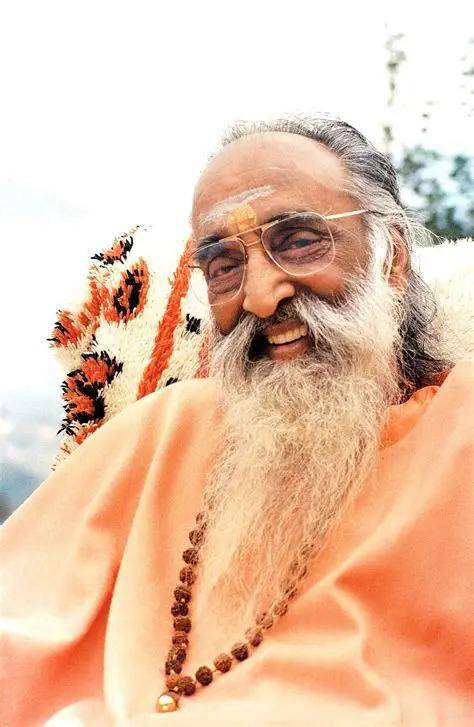 (Born May 8, 1918 – Died August 3, 1993)
Sri Swami Chinmayananda, born Balakrishna Menon (Balan), was a Hindu Indian spiritual leader and teacher who inspired the formation of Chinmaya Mission in 1953 to spread the message of Vedanta. The organization he founded and led, the Chinmaya Mission, has over 300 centers in India and around the world.
He was a disciple of Swami Sivananda at Rishikesh, who founded the Divine Life Society, and was then advised by Swami Sivananda to study under Swami Tapovan Maharaj in Uttarkashi in the Himalayas
A former journalist and Indian independence activist, he was transformed into a Vedantic master under the guidance of Swami Sivananda and Swami Tapovan Maharaj.
He devoted over four decades to democratizing Hindu spiritual knowledge, making ancient, complex philosophies accessible to millions in India and around the globe.
started the tradition of Jnana Yagnas to spread the message of the Bhagavad Gita and the Upanishads; thus, the first such Geeta Gyana Yagna was held in Pune between December 31, 1951, and April 1952. Swamiji played an important role in the formation of Vishva Hindu Parishad in 1964.
His only mission in life was to take religion from classes to the masses, and to "convert Hindus to Hinduism". He told his guru, "I feel the immense urge to go down to the plains and share the wealth of the holy scriptures with my fellow countrymen. I want to run down like a Ganga which nourishes and inspires with its refreshing waves.
He said, "Hinduism is the religion for our times." Unlike the other scriptures, the methodology followed by the Gita appears to be more conducive to the modern, scientific mind and the educated classes. For they don't believe in anything. They want everything to be rationally proved, intellectually defensible. And the approach of the Gita is very rational because Krishna had to address a dynamic, young, educated, intelligent man who was a born skeptic. Arjuna did not believe or understand that Krishna was an intellectual giant. It is only in the eleventh chapter that he got a glimpse - and, thereafter, his attitude changed. But till the eleventh chapter he was absolutely rational. He did not believe a word of what Krishna said. Krishna had to make him believe it by the strength of logic." (source: Chinmaya Mission UK).
Key Contributions to Hinduism
1. Started Jnana Yajna Movement. Instead of restricting himself to lecturing in Sanskrit, Swami Chinmayananda broke this barrier by lecturing in English and regional Indian languages. Thus, he taught scriptures using rational, logical analysis suited for the modern, educated middle class and youth.
2. Prolific writer: Swami Chinmayananda authored over 95 books and extensive commentaries on fundamental texts, most notably The Holy Geeta and the major Upanishads. He innovated visual aids for spiritual education, such as the BMI Chart (Body, Mind, Intellect), which maps out human experience and self-realization through a simple graphic model.
3. Structured Youth and Children's Programs: To make Sanatana Dharma accessible to all sections of Hindus, He recognized the importance of cultural transmission and developed different wings to meet the needs within the Chinmaya Mission:
• Bala Vihar: Cultural and value-based education classes for children.
• Chinmaya Yuva Kendra (CHYK): The global youth wing empowering young adults through spiritual principles and action.
• Adult Study Groups: Structured peer-learning circles for studying Vedantic literature.
4. Social, Educational, and Humanitarian Initiatives; Cherishing the philosophy that "service to man is worship of God," he pioneered social programs under the banner of the Mission:
• Education: Established over 70 Chinmaya Vidyalayas (schools), colleges, and international residential institutions blending modern curriculum with spiritual values.
• Healthcare & Rural Upliftment: Established Chinmaya Mission Hospital and the Chinmaya Organization for Rural Development (CORD), focusing on sustainable village development.
• Preserving Heritage: Created the Chinmaya International Foundation (CIF) at the birthplace of Adi Shankara in Kerala to encourage Sanskrit research and Indological studies.
5. Cultural Unity and Global Outreach: Swami Chinmayananda traveled extensively across the Americas, Europe, Asia, and Africa, bringing Eastern philosophy to the West. He addressed the United Nations ("Planet in Crisis" talk in 1992) and was instrumental in co-founding cultural organizations like the Vishva Hindu Parishad (VHP) in 1964 to unite the diverse sects within Hinduism.


 Urgent support needed for Bangladesh Hindus


