



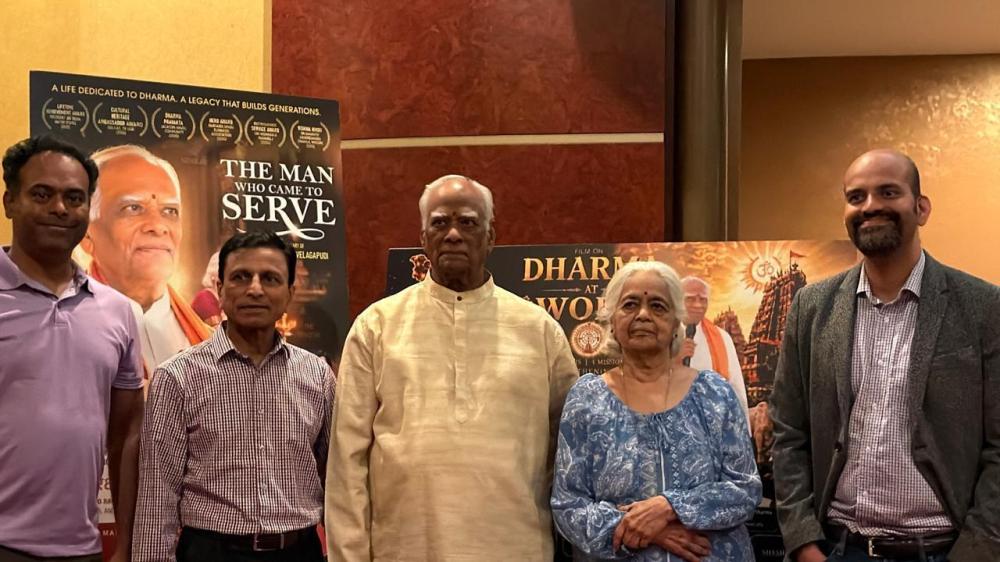
[GHHF] Two documentaries shown in a theater on October 25 received strong praise for the 16 activities and the highly professional presentation.
Global Hindu Heritage Foundation showed two documentaries on October 25 at the Cinemark Theater in Plano, TX. Chetana Productions carefully documented the activities, looking back over the past 20 years, visiting several places in Bharat, and speaking with villagers, Pracharaks, teachers, and students. More than 100 people filled the auditorium and watched the documentaries with great interest and curiosity. Several viewers shared their observations after the show, and Prime 9 TV anchor Silveri Srisailam recorded their views.
Suchetan Swaroop Vaidyanathan of Chetana Productions produced these two documentaries: “Dharma at Work” and “The Man Who Came to Serve. The idea came up when Suchetan and Chandra Movva were discussing a movie script. They thought Suchetan should make a short documentary about GHHF's 20 years of work in villages across nine states. The five-minute production concept expanded to a one-hour documentary on GHHF and a 25-minute documentary on Dr. Prakasarao Velagapudi’s journey into Sanatan Dharma. Swaroop and his team deserve congratulations for their commitment, dedication, and passion in producing these two documentaries in less than three months. They spent countless hours sifting through documents and pictures spanning more than 50 years to ensure factual accuracy.
Dharma at Work: GHHF
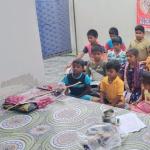
This one-hour documentary examined 16 activities the Global Hindu Heritage Foundation has conducted over the last 20 years, and it has expanded over time. The documentary is divided into eight chapters that cover numerous activities at different levels, over time, and across different States in Bharat. 1) One Man, One Mission, 2) The Fight for Temples Freedom, 3) The Children – Bala Samskar Kendras, 4) Gahr Wapasi – Home Coming, 5) Dharma on Screen – Short Film Festival, 6) Service in Crisis, 7) 2022 Frisco Controversy, 8) Chicago Protest May 2007, and other topics.
This documentary covered 16 activities: nine state activities, Recommendations submitted to government officials, Bala Samskar Kendras, feeding children every day, Ghar Wapsi activities, COVID-19 activities including serving meals and supplying machines, serving flood victims, and helping Pakistan refugees.
The dignitaries who recognized and appreciated GHHF's service include Hon. Rahurama Ramakrishnam Raju, Sri L. V Gangadhara Sastry, Dr. H. R Nagendra, Dr. Manjunath Sharma, Sri Sajay Khanna, Sri Lalit Sharma, and Sri Shree Iyer.
The Man Who Came to Serve:
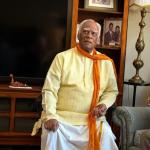
The 25-minute documentary traces the spiritual journey of Dr. Prakasarao Velagapudi into Sanatan Dharma. The chapters include The Making of a Scholar; Two Degrees and a New World; The Women Behind the Mission, Dr. Nandini Velagapudi; Building the First Temple in Jackson, MS; Meeting of Sri Sachidanand Swamiji; the Hanuman Temple; The Scholar Who Kept Writing; and Recognitions Received. This documentary traces the incident that sparked his interest in learning Sanatana, his efforts to learn and pass it on to the next generation, his marriage, the building of Temples, his association with Sri Ganapathi Sachchidananda Swamiji, and the founding of the Global Hindu Heritage Foundation.
His work was appreciated by Sri Viswamjee Maharaj, Dr. N. R. Nagendra, Dr. Thotakura Prasad, Sri Nandanandana Dasa, and Smt. Madhavi Latha Kompella.
After screening the documentaries, many shared their views on the activities and the professional presentation. Some of the comments by the viewers:
• Thank you for the documentary this will surely instill the zeal to join hands and make Prakash Rao’s efforts to the next level.
• As rightly put, it is the Dharma of each Sanantani to practice “Dharma and put it to work.”
• Kudos to Swaroop, who has highlighted the facts and presented them in a very comprehensible manner.
• I never knew who Prakash Rao Velagapudi Garu. Great to hear about him and his selfless contributions to Bharat across so many states.
Acknowledgments
The Global Hindu Heritage Foundation extends its heartfelt gratitude to everyone who has supported its mission over the past 20 years, including:
• Everyone who attended the documentary screenings and shared thoughtful comments;
• Supporters in Bharat who have helped advance the Foundation’s work;
• Teachers and Pracharaks who have carried its mission into local communities;
• Volunteers in the United States and Bharat; and
• The countless individuals whose dedication and encouragement have sustained the Foundation’s efforts.
{{album_1677}}




 Urgent support needed for Bangladesh Hindus


