
[GHHF] Allahabad High Court observed any religion to claim that theirs is “the only true religion” is wrong and disparages the sentiments of other faiths.
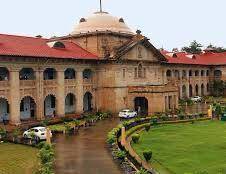 The Allahabad High Court decreed in March 2026 that stating “Jesus is the only Way”; could be construed as an offence under Section 295A of the Indian Penal Code if it hurts the religious sentiments of others. The ruling, issued in March 2026 in the case of Rev. Fr. Vineet Vincent Perera, highlights that exclusive religious claims can prima facie be treated as the denigration of other faiths in secular India.
According to the FIR, the applicant allegedly conducted prayer meetings where he frequently stated that Christianity is the only religion, thereby hurting the sentiments of a particular religion, i.e. Hindu.
The FIR was registered in 2023 at Muhammadabad police station in Mau district of Uttar Pradesh.
The application was filed by Father Vineet Vincent Pereira under Section 528 of the Bharatiya Nagarik Suraksha Sanhita (BNSS), seeking quashing of the chargesheet, cognizance order and entire proceedings in the case. The Allahabad High Court has refused to quash a case against a Catholic priest, asking him to face trial over allegations that his statements during prayer meetings hurt religious sentiments.
The court refused to quash an FIR against the priest, who was accused of repeatedly stating in prayer meetings that Christianity is the only true religion. According to the court’s reasoning, making such claims of exclusivity is sufficient grounds to proceed with a case at the initial stage.
Under Indian law, any individual can file a complaint if they feel their religious sentiments have been hurt, leaving the police and courts to determine if a prima facie case exists. However, previous Supreme Court rulings, including the 1957 Ramji Lal Modi case and subsequent clarifications in 2017, emphasize that Section 295A targets aggravated insults made with deliberate and malicious intent, rather than accidental or purely doctrinal expressions.
Justice Srivastava, at the outset, stressed that India is a land where people of all faiths and beliefs in a secular state, as defined by the Constitution of India, live together.
The court observed, “it is wrong for any religion to claim that it is the only true religion as it implies a disparagement of other faiths.”
While many Hindus view Christianity’s claims of exclusivity as inherently intolerant of pluralism, Christians consider it an uncompromising core of their faith. India’s Section 295A provides a specific legal mechanism for “hurt sentiments”; complaints, which can lead to arrest, trial, or harassment regardless of the eventual verdict.
In general, propagating one’s religion, even if it involves claims of exclusivity, is protected under Article 25 of the Constitution, subject to public order, morality, and health. Proving malicious intent remains difficult if a statement is made privately, within a church, or as part of genuine evangelism without ridiculing other faiths.
The aggressive public declarations in the presence of other communities, other faiths, or in contexts of pressurized conversion, carry a much higher legal risk. In such scenarios, the likelihood of an FIR being quashed at an early stage is low, as courts typically avoid conducting a mini trial during the initial proceedings.
Although a large number of illiterate Hindus get converted to Christianity, it is very difficult to prove. Every rational person would ask, how can a person who cannot read, write or understand, get converted to other religions overnight. Nobody can answer that question. It is also logical to conclude that some kind of allurement has taken place for these gullible Hindus to get converted, even though it is exceedingly difficult to prove. While the investigation found no evidence of forced religious conversion, the court noted that statements criticizing other religions could still fall within the ambit of Section 295A, which deals with deliberate and malicious acts intended to outrage religious feelings.


 Urgent support needed for Bangladesh Hindus


