
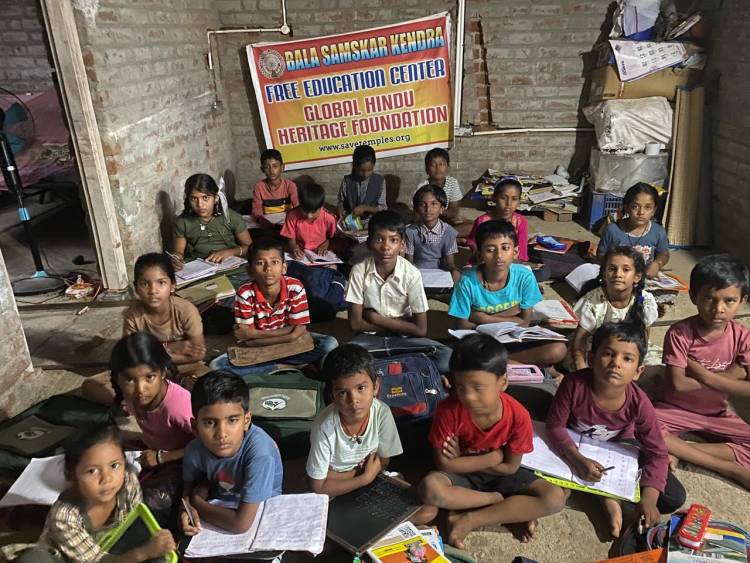
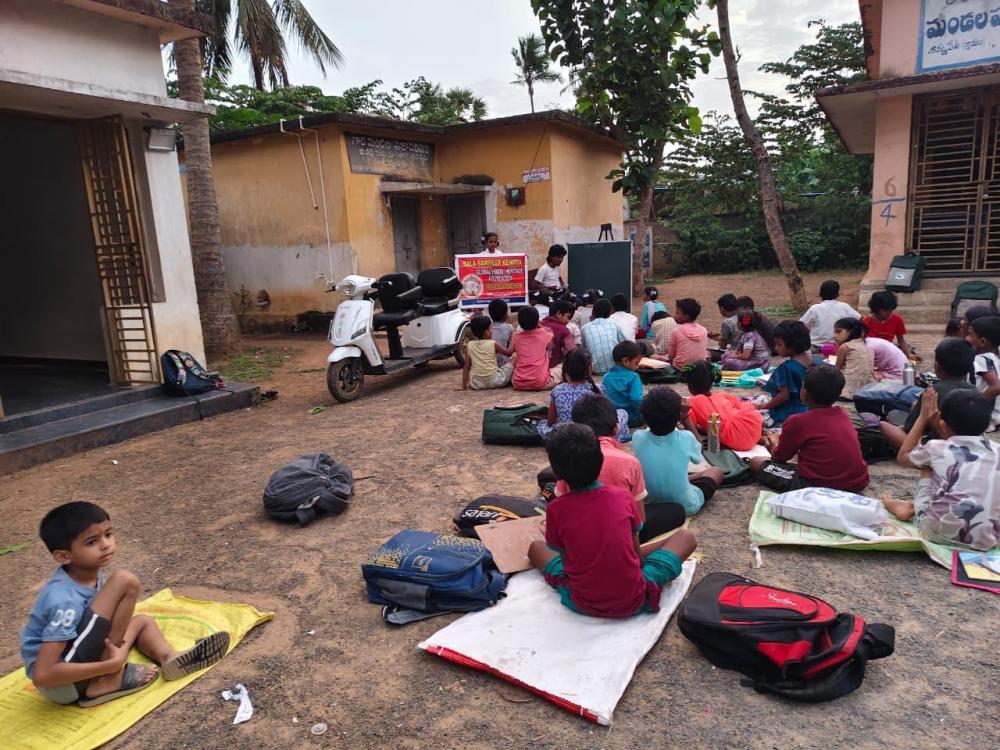
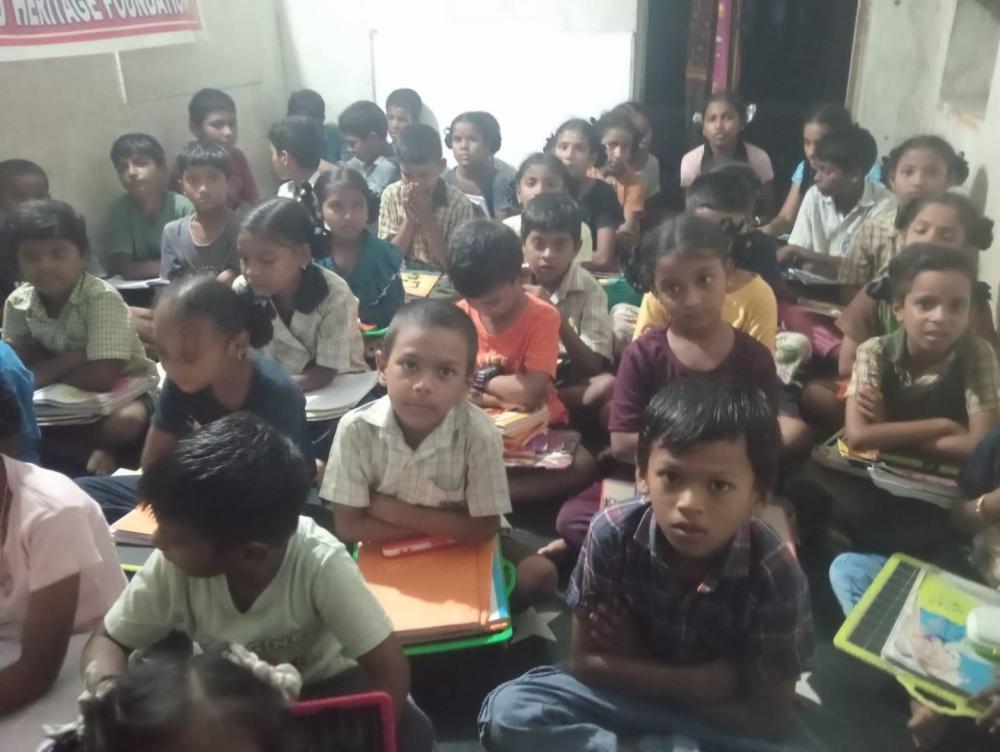
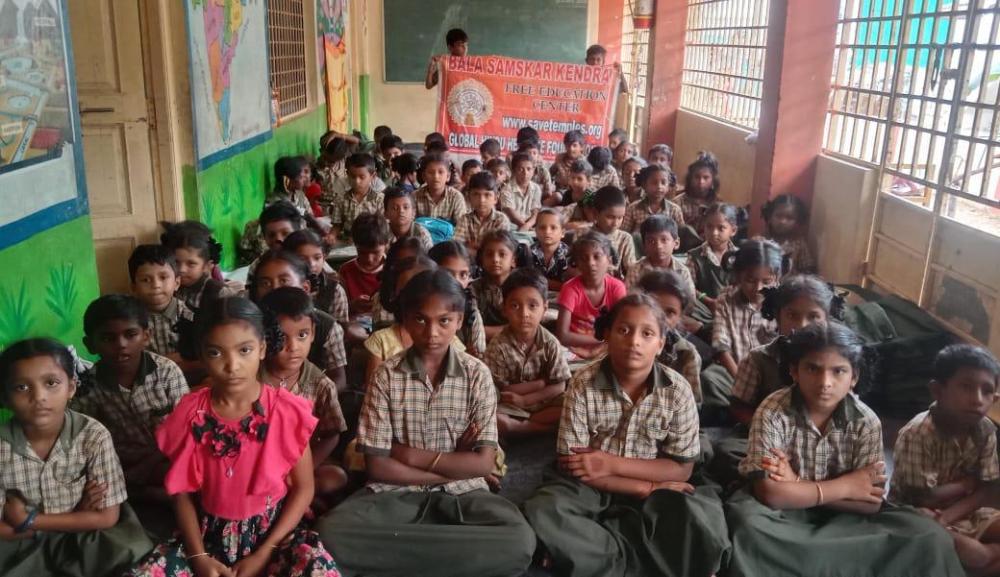
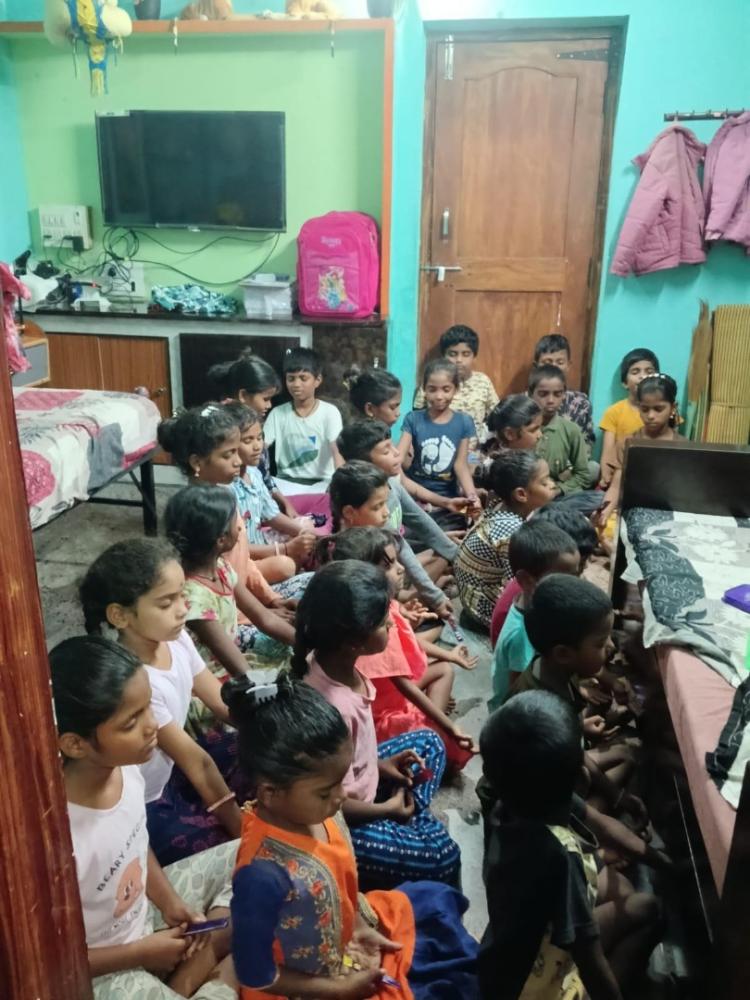
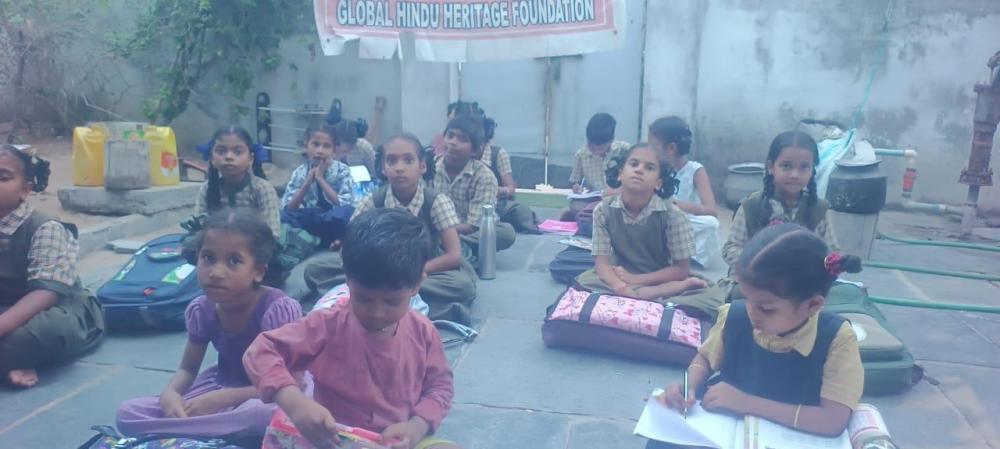
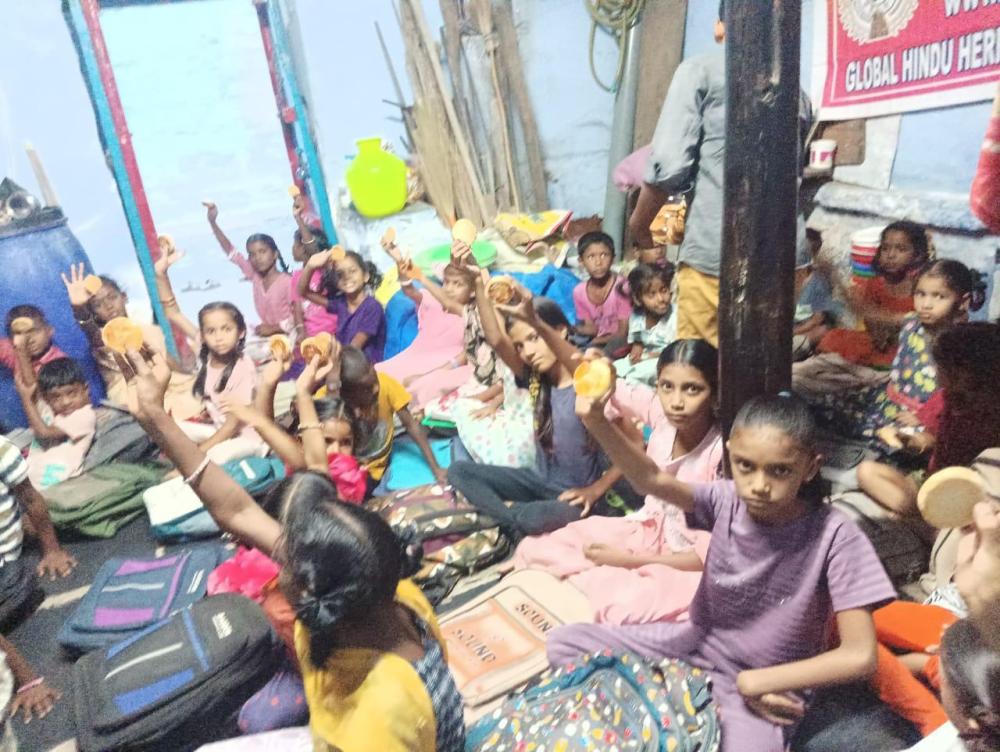
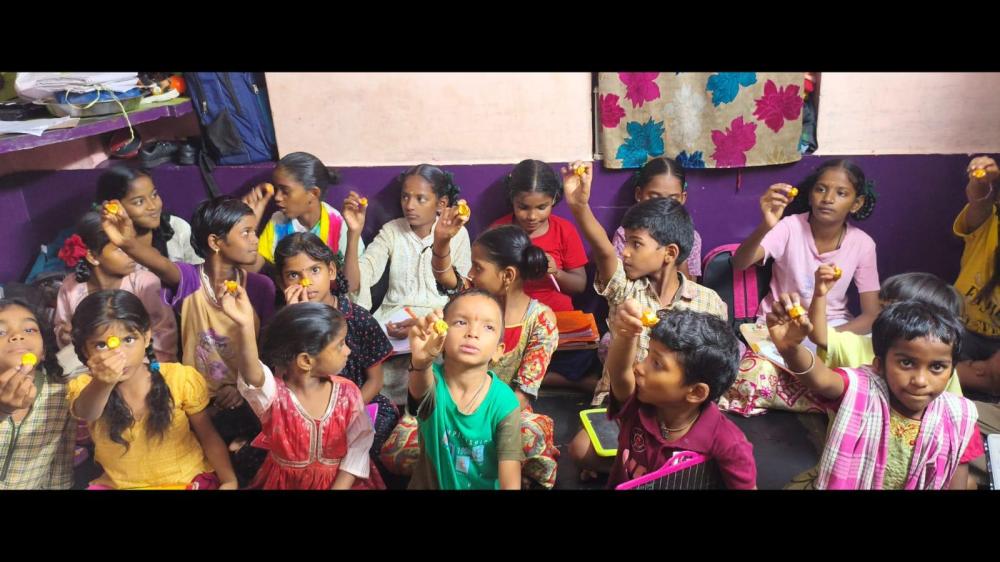
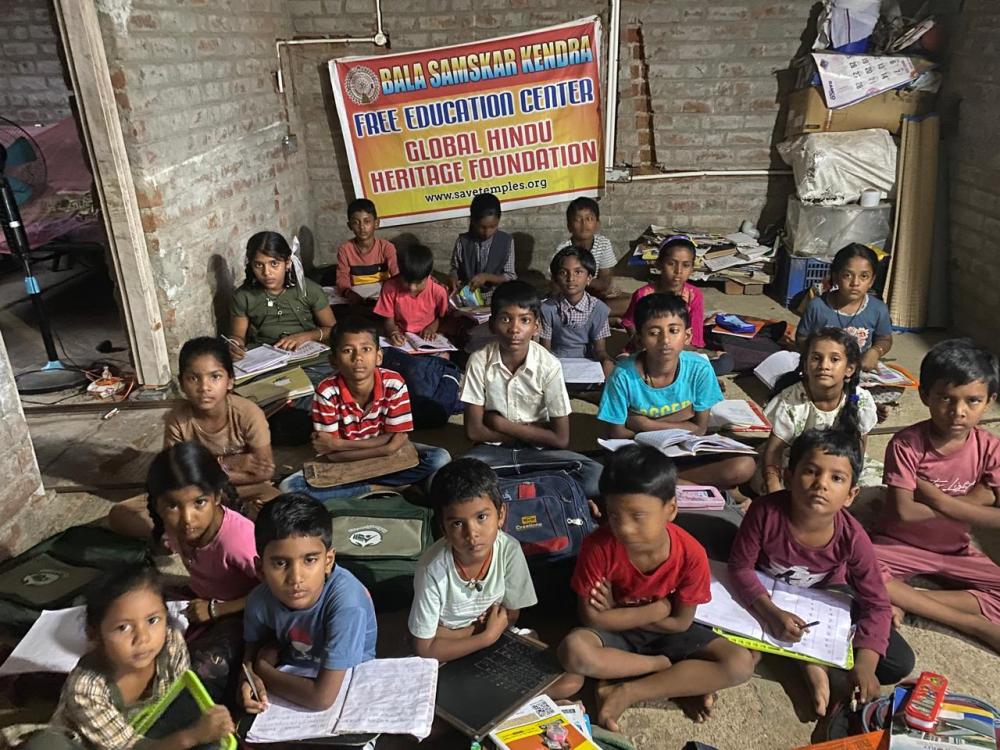
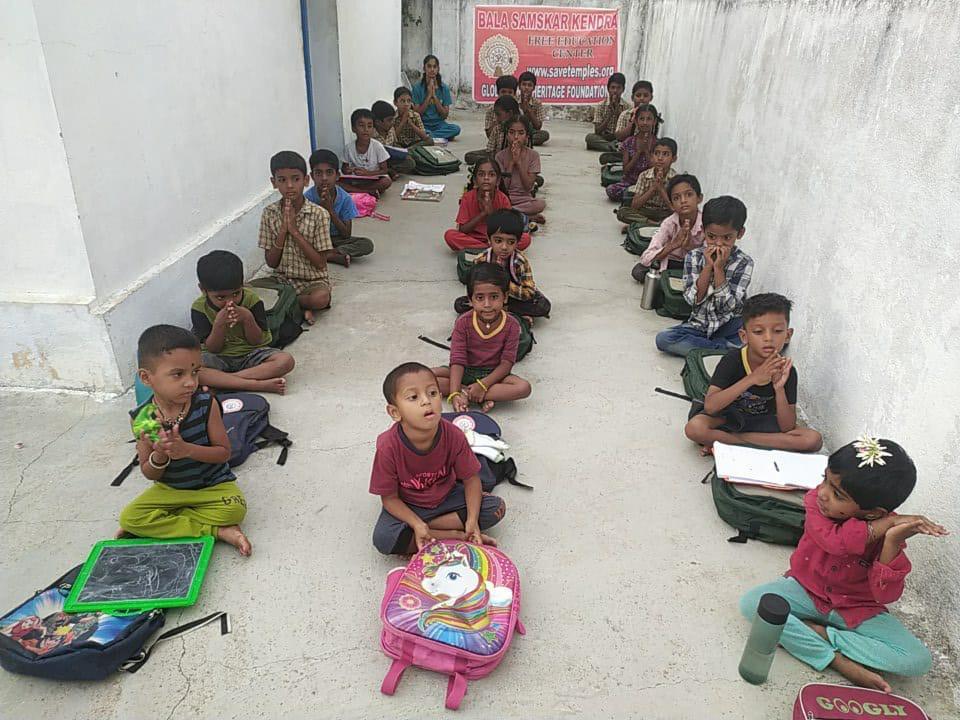
[GHHF] Bala Samskar Students learned about Bal Gangadhar Tilak, who proclaimed, “Swaraj is my birthright” and “I will change the future of my country.”
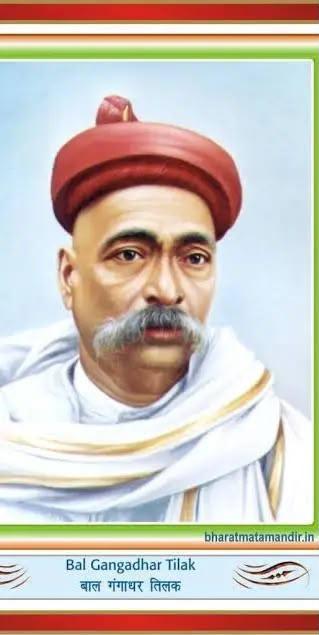
 Bal Gangadhar Tilak (July 23, 1856, and August 1, 1920)
The Great Leader Who Awakened Society Through Culture – Lokmanya Bal Gangadhar Tilak
Pune city echoes with the chants of "Ganpati Bappa Morya!" Thousands of devotees gather to pray, sing hymns, and listen to inspiring speeches. This was not just a festival; it was a powerful movement that worried the British authorities. They realized, "This is not just a festival; it has the power to unite people. If they stay united like this, they will one day challenge our rule." The leader behind this cultural awakening was Lokmanya Bal Gangadhar Tilak.
Early Life and Character
Born on July 23, 1856, in Ratnagiri, Maharashtra, to Gangadhar Ramachandra Tilak and Parvati Bai, he was named "Keshav" but affectionately called "Bal." His father, a Sanskrit scholar, taught him the value of truth, courage, and discipline from childhood. Even as a schoolboy, Tilak stood by the truth, refusing to lie to please anyone. He believed that living honestly was far greater than surviving on falsehoods—a trait that later made him a fearless leader who challenged the British Empire.
Education and Vision
After graduating in Mathematics and Law in Pune, Tilak had many lucrative job offers. However, he decided, "I will not just change my own life through a job; I must change the future of my country." He observed that the British education system lacked the soul of Indian history and culture. To counter this, he helped establish the New English School in 1880 and later the Deccan Education Society, with the goal of raising citizens who were patriotic, disciplined, and proud of their heritage.
The Power of the Press
To awaken the patriotism of every household, Tilak started two newspapers in 1881: "Kesari" in Marathi and "Mahratta" in English. These were not just for news; they were tools to ignite the fire of nationalism and fearlessly question British injustice.
Uniting the Nation
Tilak realized that while Indians followed the same Dharma, they were divided. He recalled how, during the time of Chhatrapati Shivaji Maharaj, community Ganesh Utsavs brought people together. He revived this tradition, transforming Ganesh Utsav into a powerful medium to unite society. He also popularized the birth anniversary of Chhatrapati Shivaji Maharaj to instill courage and self-respect in the youth. He famously said: "To unite people, you do not need weapons—our culture is enough."
Sacrifice and "Geeta Rahasya"
In 1908, the British arrested him on charges of sedition. He told the court that if speaking for the country was a crime, he was ready to accept the punishment. He was sentenced to six years of imprisonment in the Mandalay Jail (Burma). Even in prison, he did not lose hope; he studied the Bhagavad Gita deeply and wrote the invaluable book "Geeta Rahasya," teaching that a person is made great by their commitment to selfless duty (Karma Yoga).
"Swaraj is My Birthright"
After his release, he returned to public service with renewed vigor. He gave the nation the roaring mantra: "Swaraj (Self-rule) is my birthright, and I shall have it." This ignited the spirit of freedom in every Indian. He founded the Home Rule Movement, and because of his immense love and respect from the people, he was lovingly called "Lokmanya"—the leader respected by the people.
He passed away on August 1, 1920, but the flame of Swaraj he lit never died. His life teaches us that education can change an individual, culture can change a society, and a united society can change the future of a nation.
Teacher's Tasks
Discussion (Analysis):
Why did Tilak choose education over a government job?
Ans: He believed the nation needed patriotic citizens, not just employees, and aimed to build them through culture and education.
What was his intention behind turning Ganesh Utsav into a public movement?
Ans: To unite the Hindu society, foster patriotism, self-respect, and unity.
Why did he remain hopeful in Mandalay Jail?
Ans: He believed that while the body could be imprisoned, thoughts could not. He used that time to write "Geeta Rahasya."
What was the impact of the slogan "Swaraj is my birthright"?
Ans: It awakened the pride of Indians and strengthened their resolve to fight for freedom.
Creative Expression:
● Task 1: "To unite people, you do not need weapons-our culture is enough." Explain this in your own words.
● Task 2: Describe a project you would like to start in your school or village to bring people together.
● Task 3: Share the incident from Tilak's life that inspired you the most.
Practical Tasks:
Task 1: Discuss the importance of an Indian festival or the life of a great hero with your family this week.
Task 2: Sing a patriotic song or Ganesh Bhajan with your classmates to experience the power of unity.
Task 3: Perform one small act that fosters unity, such as helping a new student or participating in a group cleanliness drive. Share your experience in the next class.
Your donations are appreciated:
By Zelle: ghhfusaorg@gmail.com
PayPal: savetemples.org
By Rupees: call 601-918-7111; +91 83096 43979


 Urgent support needed for Bangladesh Hindus


