
[GHHF] Gau Puja and GHHF’s Effort to Revive the Sacred Tradition of Honouring Gau Mata
2026/08/09
Sai Srinivas
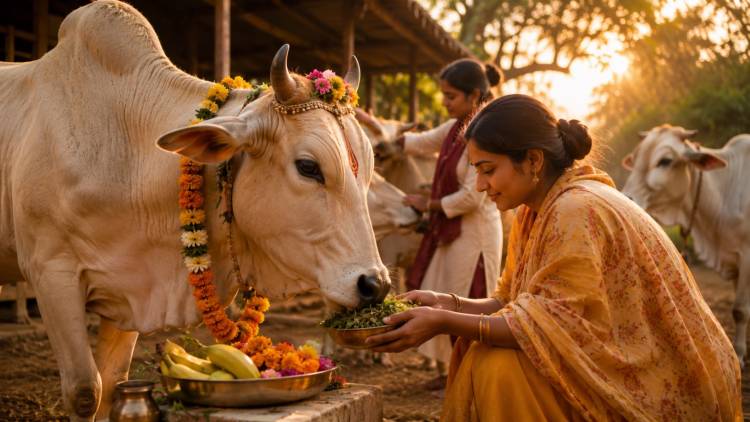
For generations, the cow has held a place of profound reverence in Hindu civilization. Known as Go, Gau or Gau Mata, the cow is regarded not merely as an animal, but as a sacred symbol of nourishment, abundance, compassion and prosperity.
The Global Hindu Heritage Foundation (GHHF) is working to preserve and revive this ancient tradition through the regular performance of Gau Puja in villages and communities. GHHF works at the grassroots level, including in remote villages, hilly areas, tribal areas and Dalit communities, with the aim of encouraging people to participate in traditional Hindu rituals and spiritual practices. Its Gau Puja initiative is one part of this broader effort to revitalise Hindu traditions and bring communities together in devotion, unity and harmony.
The Sacred Place of the Cow in Hindu Tradition
The reverence for Gau Mata has deep roots in India’s spiritual heritage. The cow has traditionally been associated with nourishment because of the milk she provides, while milk and its products, particularly ghee, have played an important role in Hindu religious and ritual traditions.
The Vedic tradition gives the cow an especially sacred status. The cow is associated with Aghnya, traditionally understood as one who should not be killed, reflecting the principle of protection and reverence.
The cow is also associated with the maternal principle represented by Aditi, reinforcing the traditional understanding of Gau Mata as a source of nourishment and abundance.
This sacred relationship is not simply about what the cow provides. It reflects a deeper Hindu understanding that those who nourish and sustain life deserve gratitude, care and protection.
GHHF and the Revival of Gau Puja
For the Global Hindu Heritage Foundation, preserving Hindu heritage means keeping traditions alive through actual community participation.
GHHF’s Gau Puja programme does precisely this.
According to GHHF, Gau Puja is performed regularly for the benefit of bestowing wealth, happiness and prosperity. The organisation describes the cow as a manifestation of Gau Mata, and Gau Puja as the worship of Goddess Kamadhenu, the divine cow associated with the fulfilment of desires.
Rather than allowing these traditions to remain confined to scriptures, stories or memories, GHHF brings them into the lives of communities through organised religious activities.
This is particularly important in rural areas, where traditional community-based spiritual practices have historically played an important role in bringing people together.
The Story of Kamadhenu
GHHF’s Gau Puja tradition is closely connected with the ancient story of Kamadhenu, the divine cow.
According to the tradition described by GHHF, Kamadhenu emerged during the Samudra Manthana, the cosmic churning of the ocean. She was regarded as possessing the capacity to fulfil desires and eventually became associated with Sage Vasishta. The story of Kamadhenu has therefore become deeply connected with ideas of abundance, divine blessings and prosperity.
Gau Puja reflects this sacred association. When devotees worship Gau Mata, they are participating in a tradition that regards the cow as a manifestation of divine abundance and a source of blessings.
Gau Mata: Nourishment and Prosperity
The sacred importance of the cow is also connected with her role as a provider. Milk has traditionally been regarded as a source of nourishment, while ghee has been used in sacred offerings and Vedic rituals. The relationship between the cow and human society therefore developed around both nourishment and responsibility.
The Hindu tradition does not view this relationship simply as receiving from the cow. Reverence also means caring for and protecting her. This is where Gau Seva becomes an important expression of Dharma.
To serve Gau Mata is to transform reverence into action—to provide care, nourishment and protection rather than merely offering ritual worship.
A Tradition That Brings Communities Together
One of the most meaningful aspects of GHHF’s work is that its spiritual programmes are designed to encourage community participation.
GHHF describes its broader work as an effort to revive pujas, homas and abhishekams and provide people with opportunities to participate in these rituals regardless of caste or creed. The organisation believes that such collective activities can revitalise villages and create greater unity and harmony among community members.
Gau Puja naturally becomes an important part of this effort.
When families and community members gather to honour Gau Mata, the ceremony becomes more than an individual act of worship. It becomes a shared spiritual experience through which traditions can be remembered, practiced and passed to younger generations.
The Spiritual Significance of Gau Puja
GHHF’s article describes Gau Puja as a practice believed to remove negativity and bestow wealth, happiness and prosperity. It also describes traditional beliefs concerning the sacred presence of numerous deities within the cow and the blessings associated with serving and worshipping Gau Mata.
These beliefs illustrate the depth of the cow’s place in Hindu spiritual thought.
Gau Mata represents a connection between Dharma, nourishment, prosperity and devotion. Worshipping her is therefore understood not simply as venerating an animal, but as honouring a sacred principle of life and abundance.
Traditional Hindu teachings likewise connect the cow with Lakshmi, prosperity and divine presence, further reinforcing the importance of protecting and honouring her.
Preserving Tradition Through Practice
A civilization’s traditions remain alive when they are practiced.
This is what makes GHHF’s work particularly significant. Its Gau Puja initiative gives communities an opportunity to experience their spiritual heritage directly rather than allowing ancient practices to become distant memories.
A child who witnesses Gau Puja learns that the cow is worthy of respect. A family that participates in the ceremony reconnects with an inherited tradition. A village that gathers together strengthens its sense of community.
Through these simple acts, a much older cultural tradition continues into another generation.
GHHF’s Larger Vision
Gau Puja is part of GHHF’s broader grassroots effort to revive Hindu religious and spiritual practices.
From remote villages and tribal communities to other areas where traditional practices may have weakened, GHHF seeks to create opportunities for people to participate in pujas, homas, abhishekams and other forms of devotional activity. The organisation’s stated objective is to revitalise communities and encourage participation in practices associated with Loka Kalyanam—the welfare of all.
In this larger vision, Gau Puja becomes both a spiritual practice and a means of cultural preservation. It brings together devotion, tradition, community and Seva.
Honouring Gau Mata, Preserving a Living Heritage
The reverence for Gau Mata is deeply rooted in India’s spiritual heritage. From the Vedic tradition to Kamadhenu and Gau Puja, the cow remains a symbol of nourishment, abundance and divine grace.
Through its regular Gau Puja programmes, the Global Hindu Heritage Foundation is helping keep this tradition alive by promoting gratitude, compassion, Dharma and Seva while bringing communities together and passing this sacred heritage to future generations.
Your donations are appreciated.
By Zelle: ghhfusaorg@gmail.com
PayPal: savetemples.org
By Check: You can send a check payable to GHHF, 14726 Harmony Lane, Frisco, TX 75035.
It is tax-deductible.
By Rupees: Call 601-918-7111; +91 83096 43979


 Urgent support needed for Bangladesh Hindus


