
[GHHF] Judith Tyberg, a Sanskrit Scholar, viewed Sanskrit as a living, sacred system of spiritual science, sound vibration, and cosmic psychology.
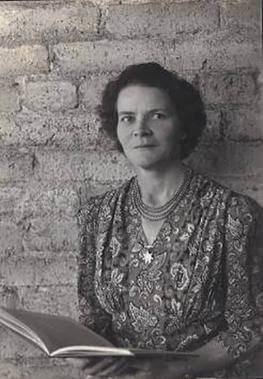 Judith Tyberg (1902–1980), also known by her spiritual name Jyotipriya, was an American orientalist, educator, Sanskrit scholar, and yogi. She played a pivotal role in bridging Eastern philosophy and Western understanding during the 20th century.
Born at the Point Loma Theosophical Community in California, Tyberg studied classical languages, religion, and philosophy from an early age. She began formal Sanskrit studies in 1930 and eventually earned her Ph.D. in Sanskritic Studies from the Theosophical University.
She wrote several books, including “Sanskrit Keys to the Wisdom Religion”; “Hymn to the Origin of the World from the Rig Veda”; “First Lessons in Sanskrit Grammar and Reading”; “The Language of the Gods: Sanskrit Keys to India's Wisdom”; and others
Dr. Radhakrishna, Vice Chancellor of Benares Hindu University, awarded her a three-year scholarship to study in India. At BHU, she studied traditional Sanskrit and Indian philosophy, interacting with academic authorities, professors, and traditional Sanskrit scholars.
She talked about the greatness of Sanskrit:
"Sanskrit is one of the noblest languages that human genius has brought forth. Because of its grandeur, it is one of the most difficult to understand. Sanskrit is the pride of the people of India, and knowledge of it gives the key to their hearts. It is the learned language of India, the language of its cultured inhabitants"
Tyberg’s view of Sanskrit’s importance was quoted by the Los Angeles Times: “Not only are the languages used on the European and American continents deficient in words dealing with spirit, but many of the English words that do have spiritual connotations are so weighty with false and dogmatic beliefs that it is difficult to convey an exact meaning to all ... while Sanskrit expresses the inner mysteries of the soul and spirit, the many after-death states, the origin and destiny of worlds and men and human psychology.”
In her view, the very pronunciation and etymology of Sanskrit act as spiritual keys that unlock deep truths about the universe, human consciousness, and the inner workings of the soul. She taught that ancient seers consciously designed its structure and vocabulary to reflect divine realities and elevate human awareness toward higher states of spiritual realization.
She spent two months in the Sri Aurobindo Ashram in Autumn 1947. On November 24, one of the four days each year when Sri Aurobindo broke his seclusion, Tyberg paid her reverence to Sri Aurobindo and his spiritual collaborator, Mirra Alfassa, a Frenchwoman known as “The Mother”. Tyberg’s diary recorded her experience: “I just felt God”, “electric forces”, “stretched out to infinity”, and “I really knew what my soul was”. In a private audience with The Mother, Judith Tyberg asked to receive a spiritual name, which Sri Aurobindo chose: “Jyotipriya, the lover of Light”.
After spending three years in India, she founded the East-West Cultural Center in Los Angeles (later known as the Sri Aurobindo Center of Los Angeles). The center served as a hub for hosting Indian scholars, yogis, and spiritual teachers, making traditional Indian philosophy accessible to Western students.
A passage from the book “Sanskrit Keys to the World Religion”, by Judith Tyberg
Sanskrit is one of the noblest languages that human genius has brought forth. Because of its grandeur it is one of the most difficult to understand. Sanskrit is the pride of the people of India, and knowledge of it gives the key to their hearts. It is the learned language of India, the language of its cultured inhabitants, the language of its religion, philosophy, literature, and science, a language very much alive in the heart-life of its people. The Hindus are a nation of philosophers and mystics. Max Muller called them "the most highly gifted race of mankind." Almost every phase of philosophical thought in the West is represented in one form or another in Hindu philosophical works.”
The India of old is constantly rising in estimation since the discovery of its grand achievements in language, literature, art and philosophy. It will be realized more and more that a knowledge of the culture of old India is essential to the foundation of a proper understanding of the origin and growth of Western civilization. Sanskrit is a language which, though possessing voluminous and valuable works in prose and verse, has but recently become known to Europe. Just as a botanist may estimate the age of a tree from the number of its branches and the circumference of its trunk, so in like manner, a linguist can estimate the age of a language from the number of its branch-dialects and the area of the country over which it is spoken. As there is no language so perfect in its forms and with so many branches and sub-branches as the Sanskrit, it must be regarded as the oldest of all the existing literary languages. Besides being the oldest of our literary languages it is also the most replete with knowledge concerning the wonderful and recondite potentialities of the human spirit.
Jyotipriya left her body at 3:15 p.m. on the third of October 1980. In her last testament she had written:
“In the event of my death, I would like my body to be cremated and the ashes there from thrown among the flowers of a happy garden. May any service that may be held be one of meditation, music and prayer for the speedy return of my soul to the Divine for new joy, power and wisdom, so I may return again to serve the Light.”
After a life where she sought “long service ... in search of truth, beauty and joy to share with all”, her final aspiration was “the speedy return of my soul to the Divine ... so I may return again to serve the Light”.
She also met Mahatma Gandhi, Maulana Azad, V. K. Gokak, B. L. Atreya, Anandamayi Ma, Ramana Maharshi, Sri Ramdas, and Krishna Prem and others. Tyberg spent a week with the sage Ramana Maharshi at his Arunachala ashram where he told her “You’re already realized, you just don’t know it.”
Your donations are appreciated;
By Zelle: ghhfusaorg@gmail.com
PayPal: savetemples.org
By Check: GHHF, 14726 Harmony Lane, Frisco, TX 75035.
By Rupees: call 601-918-7111; +91 83096 43979


 Urgent support needed for Bangladesh Hindus


