
[GHHF] Makar Sankranti – a festival is a blend of spirituality, health, knowledge, and social well-being.
 Hindu festivals are not just holidays, new clothes, or pastries. Each of our festivals is a blend of spirituality, health, knowledge, and social well-being. Our ancestors built each ritual with a scientific approach. In the Dwapara Yuga, Lord Balarama and Lord Krishna enriched the Indian continent with dairy crops. While Balarama, as a farmer (Halik Udai) with a plough, made the land fertile and turned agriculture into a festival, Lord Krishna, as a cowherd, developed the cowherd and promoted dairy products. Inspired by both, 'Sankranti' emerged as an agricultural festival, associating cattle, which play a key role in the production of food grains with our lives.
● Bhoota Daya: This land does not belong only to humans, but the 'Bhoota Daya' that every living being has an equal right here is visible in our festivals.
● Nature Worship: Our festivals proclaim that human survival is possible only by preserving and worshipping nature.
● Scientific Foundation: Behind every festival, there is a health secret or an astronomical science. Therefore, we should not see Sankranti as just a festival, but as a festival that helps us understand the scientific and human depth of our culture. Through the festival of Sankranti, we get three great samskaras: health (Bhogi), spiritual knowledge (Sankranti), and compassion for life (Kanuma).
Bhogi: Mass Health Sacrifice and Scientific Secrets. The first day of the Sankranti festival, 'Bhogi', is not just a ritual; it is a mass health sacrifice. The scientific secrets behind it and the results of worldwide research are as follows:
1. Bhogi Mantalu (mass burning): Due to the extreme cold during Sankranti, harmful germs increase in the atmosphere. Burning medicinal tree branches like Ravi, mango, and medi (oudumbara) in a bonfire is like a 'mass homam'. A study conducted by the National Botanical Research Institute (NBRI) in Lucknow has scientifically proven that smoke from the homam fire reduces airborne bacteria by up to 94%. The 'formaldehyde' is released when cow ghee is burnt, and the 'methanol' present in cow dung disinfects the atmosphere.
2. The homam fire improves air quality. The smoke emitted by the ghee-homam combination releases 'negative ions' into the air. These cause dust particles and airborne allergens to fall. This cleans the air and provides our lungs with quality oxygen.
3. On December 3, 1984, when a methyl isocyanate (MIC) gas leak occurred in Bhopal, the world was shocked when the family of Sohan Lal Kushwaha escaped safely despite being very close to the poisonous gas. At that time, a team of doctors from the hospital in Bhopal, Dr. M.L. Sharma and Dr. S. Jain, conducted research on the family. The doctors confirmed that the smoke emitted by the Kushwaha family's constant 'Agnihotra Homa' formed a 'protective layer' around their house. This not only neutralized the poisonous gas but also protected their blood from any abnormalities. Scientific journals in Germany and America have also analyzed how this 'Agnihotra Therapy' reduces environmental pollution.
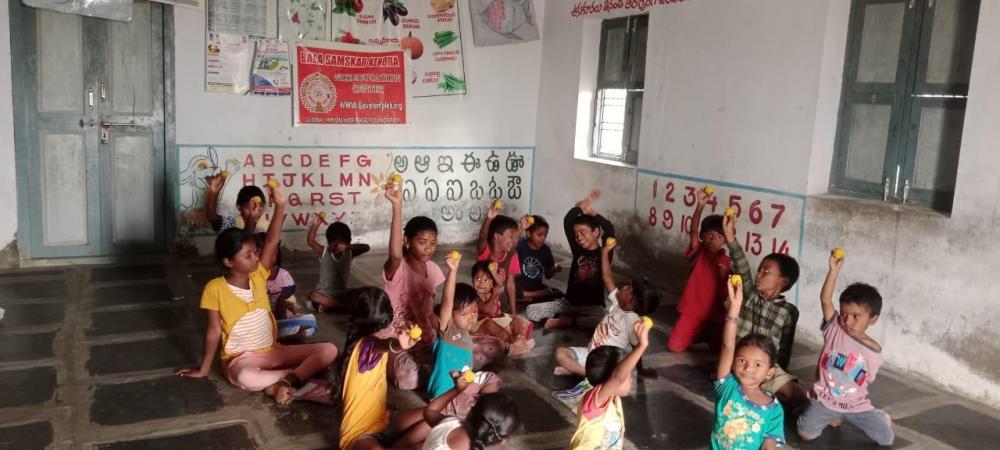
4. Plums are called 'Arka fruits'. They store solar energy. When poured on the head, these have a positive effect on the child's brain. As these grains touch certain points on the head, the nerve centers on the head are stimulated (Soft Acupressure), and blood circulation improves. This increases the child's cognitive power and concentration. Plums are rich in vitamin C.
Makar Sankranti – Astronomy and Health Benefits
1. We celebrate Sankranti on the day when the sun enters Capricorn from Sagittarius. Due to this, the day gradually increases in the northern hemisphere.
2. Our almanac calculation takes into account the sun, moon, and zodiac. Our ancestors decided on this festival by determining which stars the sun is among in the sky. This is called 'Nirayana Siddhanta'. It is more subtle than modern astronomy.
3. Our scriptures say that Uttarayan is the 'day of the gods'. As proof of this, Bhishma Pitamah waited for this auspicious time, gave up his life, and attained Kaivalya.
4. Eating sesame and jaggery on Sankranti gives warmth to the body. The calcium in sesame and the iron in jaggery increase the body's immunity.
5. Placing cow dung in the porch purifies the air. By pouring rice flour on the ants and birds, food is provided. This is a proof of 'Bhoota Yajna' (compassion for living beings) in our Sanatana Dharma.
Kanuma Festival - Scientific and Social Aspects
1. Cattle Festival - Gratitude: The 'Advaita Bhavana', which proclaims that God is present in every living being in creation, is seen in this. The health secret behind applying colors (lime) to the horns of cattle is that they prevent infections that can affect cattle.
2. Nature Worship: The main purpose of 'Yeruvaka' is to recognize the labor behind the food we eat and to show respect for the laborers. We remember the Sun, the Moon, the Wind and Mother Earth, reminding us that man is dependent on nature.
3. Govardhan Puja: The message is that man can be saved only if he protects nature (mountains, forests).
Your donations are appreciated.
By Zelle: ghhfusaorg@gmail.com
PayPal: savetemples.org
By Check: Or you can send a check payable to GHHF, 14726 Harmony Lane, Frisco, TX 75035.
It is tax-deductible.
By Rupees: call 601-918-7111; +91 83096 43979


 Urgent support needed for Bangladesh Hindus


