
[GHHF] Attended Dr. Nagendra’s lecture on Panchakosha with an emphasis on Silence and Bliss as per our Vedas and Upanishads
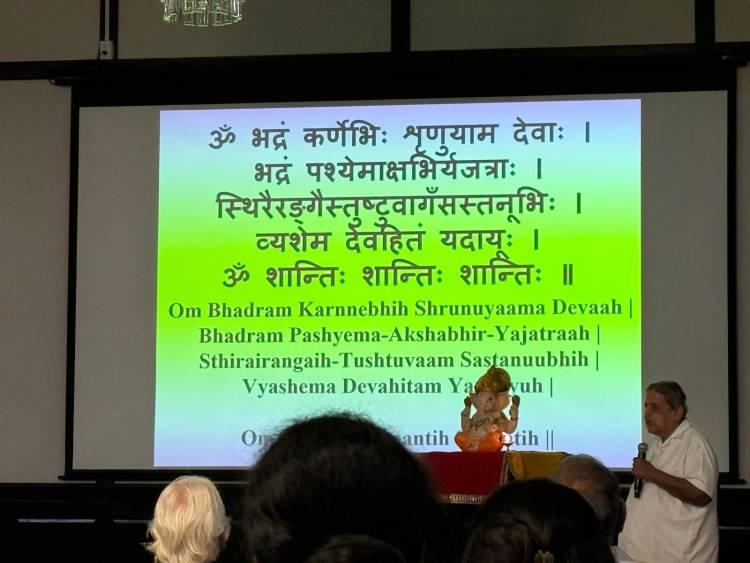 I had the opportunity to meet Dr. Nagendra about 10 years ago and have been closely associated with the Vyasa USA branch for about 2 years. In fact, I visited Svyasa Deemed University in Bangalore about five years ago, stayed one night, and attended his lectures. During that time, I had the opportunity to meet the then Chief Minister of Karnataka, Sri Basavaraj Bommai.
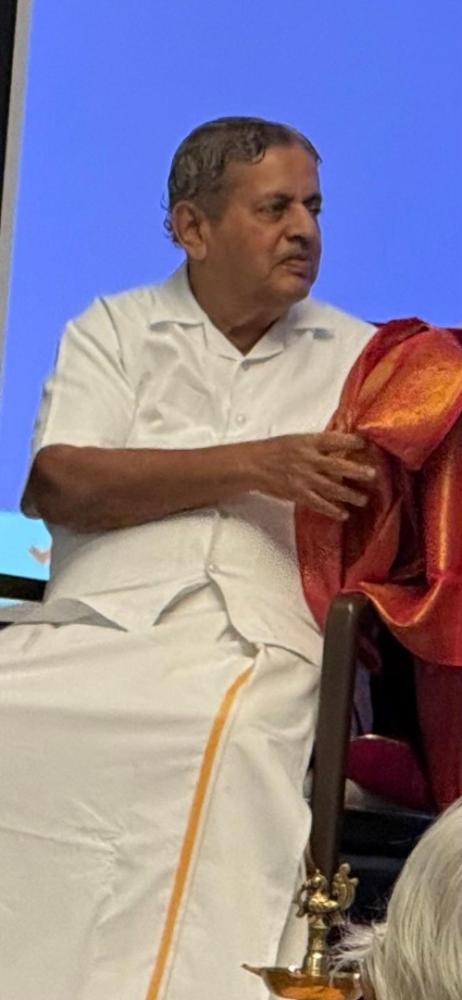
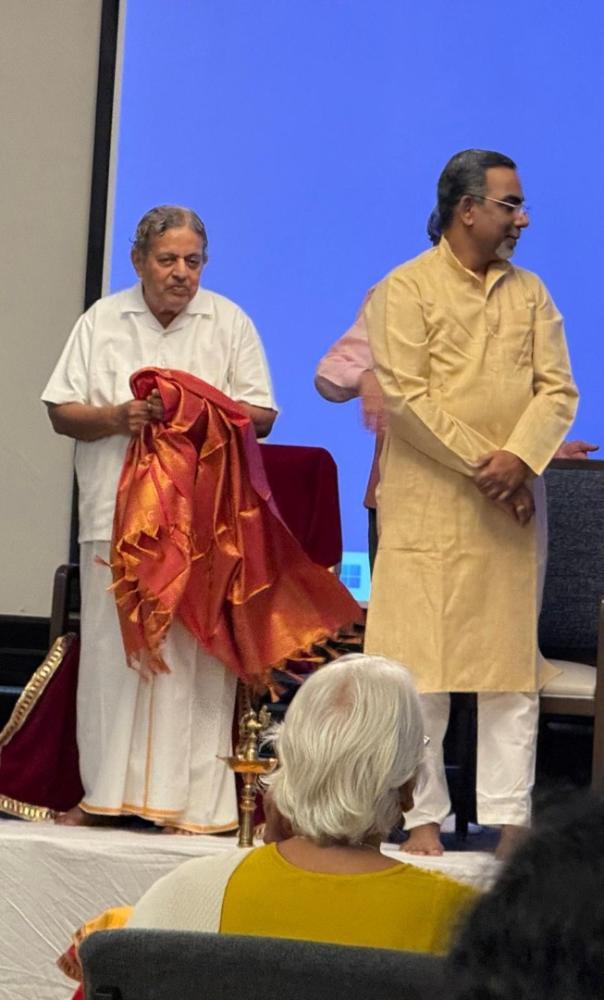
Dr. H R Nagendra, who received the Padmasree award, is globally recognized as a Yoga Guru and holds the esteemed positions of President at Vivekananda Yoga Anusandhana Samathana (VYASA) and Chancellor at Swami Vivekananda Yoga Anusandhana Samsthana University (S-VYASA University). Dr. Nagendra earned his bachelor’s degree in mechanical engineering from Bangalore University and a Ph.D. in Mechanical Engineering from the Indian Institute of Science (IISc), Bangalore, in 1968. His illustrious career includes roles as a faculty member at IISc, a Post-Doctoral Research Fellow at the University of British Columbia, Canada, and a consultant at the Engineering Science Laboratory, Harvard University, USA.
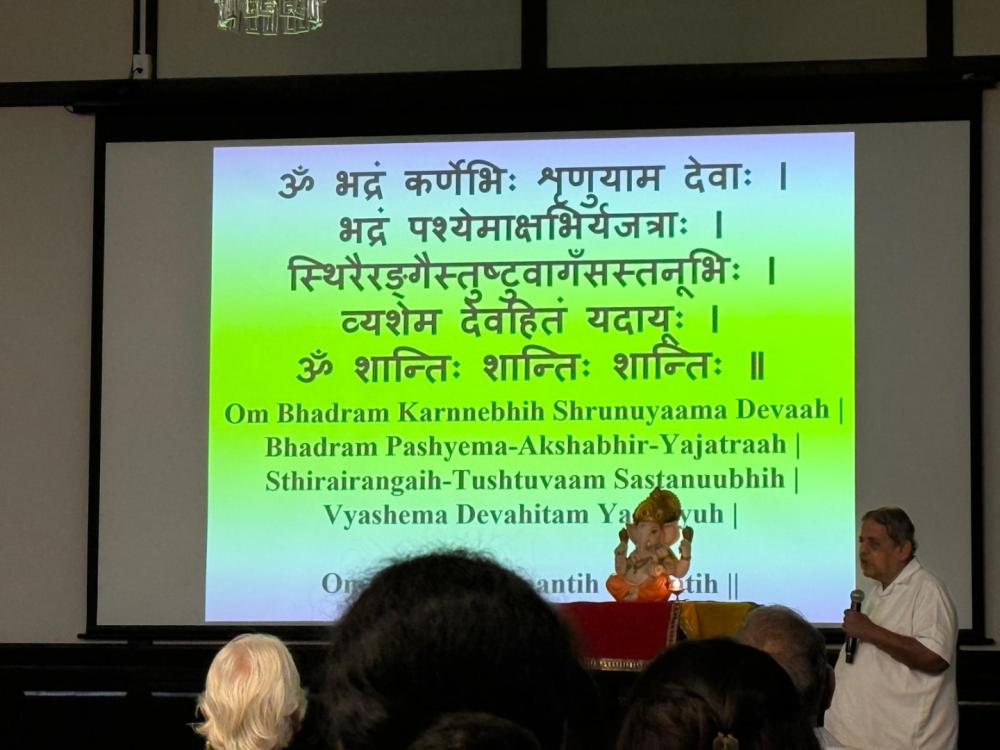
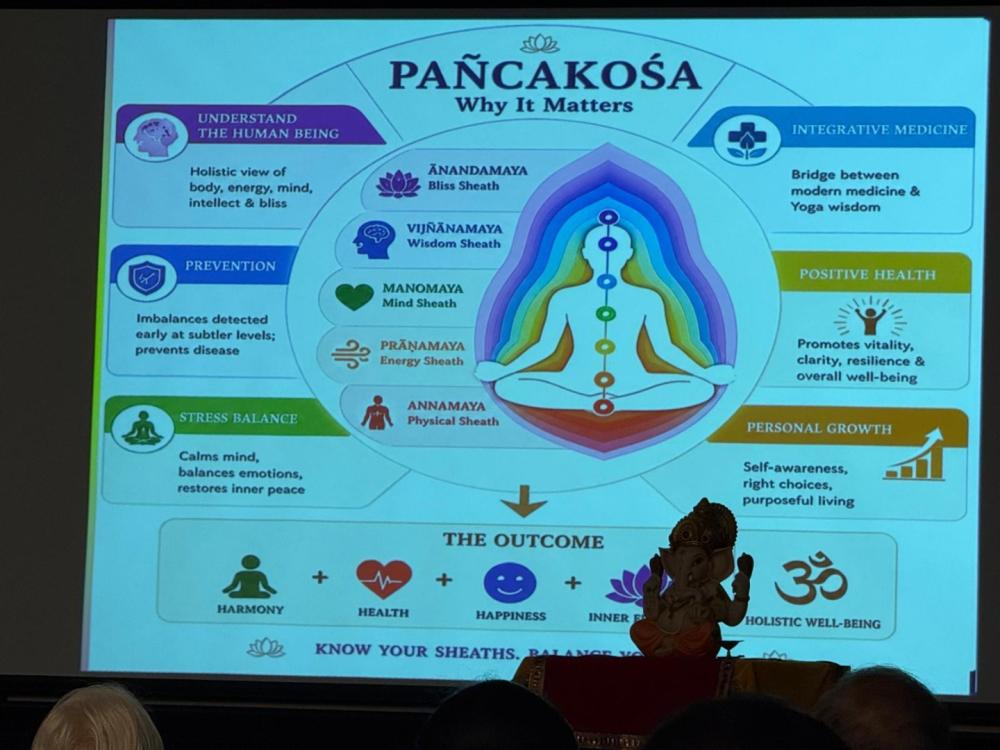
On June 16, Dr. Nagendra delivered a powerful speech on Panchakosha at Bharatiya Nivas in Dallas, in which he discussed Silence and Bliss. Human beings are made of Pancha Koshas, which provide a roadmap for better understanding of psychological and spiritual development. The aim of Yoga is to move inward, taking a journey through higher states of consciousness to one's true nature of hidden infinite bliss, knowledge, power, and freedom.
Clinical research is being conducted worldwide to scientifically assess the benefits and impact of Yoga practices. The results so far have established the scientific basis of Yoga; therefore, Yoga is widely accepted as a discipline that promotes physical and mental wellness in humans. Yoga as a way of life will also bring experience about the real essence of Yoga.
Dr. Nagendra talked about the importance of SILENCE. It fosters peace and mental clarity. In silence, one can engage in deeper self-reflection and personal growth. It improves one’s concentration and mindfulness. In it, thoughts dissolve, and self-awareness expands, thereby allowing introspection and reflection. Research suggests that prolonged silence can lead to increased creativity and problem-solving abilities. Silence can bring joy, happiness, and bliss.
Brian David Josephson.
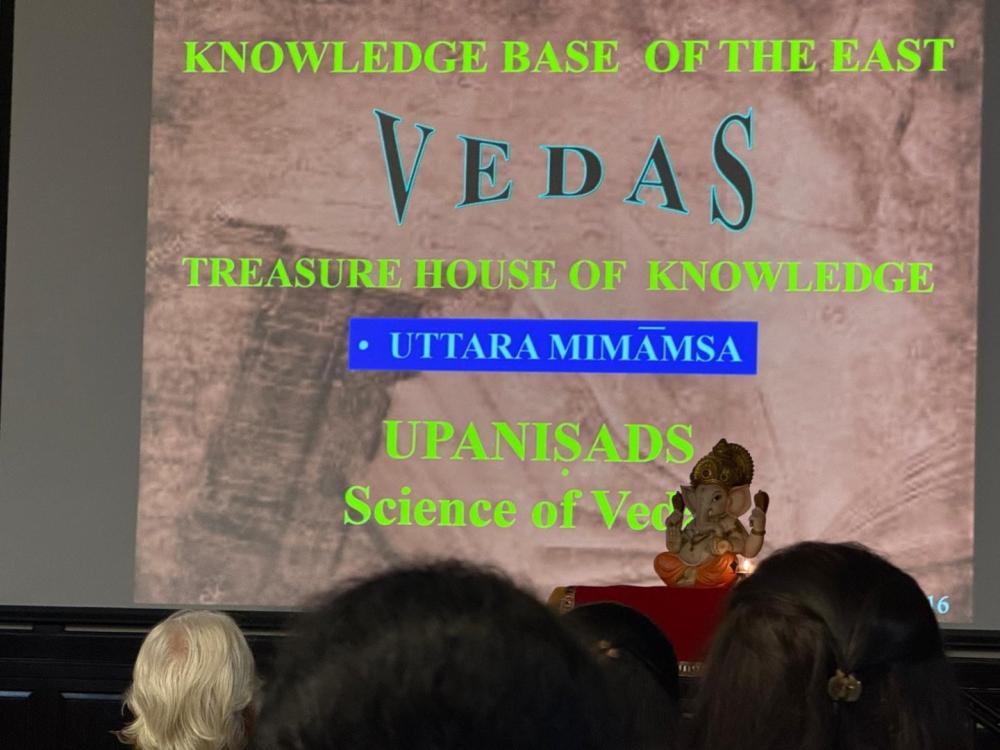
While discussing the importance of the Vedas and the Upanishads, he mentioned Dr. Brian David Josephson was the youngest person to receive the Nobel Prize in Physics. Brian David Josephson states that modern science has many unresolved questions and that their answers can be found in the Vedas and Upanishads. He views these ancient texts as a rich source of conceptual tools that can help modern physics bridge the gap between matter and consciousness.
Josephson has frequently argued in his lectures that science needs to "go beyond quantum physics" to understand the subtle dimensions of the universe. He argues that Western cognitive science is limited, while the Upanishads offer a cohesive framework for understanding the nature of ultimate reality.
The Science of Consciousness: While conventional physics treats consciousness as a secondary byproduct of biological matter, Josephson aligns with the Upanishadic view that consciousness is fundamental to the universe. He supports looking at the mind, intellect, and cosmic consciousness through a unified scientific lens.
Josephson has famously referenced the core worldview found in the Upanishads, capturing its essence by noting: "From joy does spring all this creation, by joy is it maintained, towards joy does it progress, and into joy does it return."
Paul Brunton
Dr. Nagendra gave an example of Paul Brunton, whose questions were peeled away as he sat in silence before Ramana Maharshi. Brunton traveled widely in the East in search of answers to the kind of questions that our busy postindustrial civilization tends to ignore and suppress. He went to the Ramana Maharshi Ashram and sat in front of him. Paul Brunto described his experience of sitting in front of Maharshi:
There is something in this man which holds my attention as steel filings are held by a magnet. I cannot turn my gaze away from him. I become aware of a silent, resistless change, which is taking place within my mind. One by one, the questions which I prepared with such meticulous accuracy drop away. I know only that a steady river of quietness seems to be flowing near me; that a great peace is penetrating the inner reaches of my being, and that my thought-tortured brain is beginning to arrive at some rest. I perceive with sudden clarity that intellect creates its own problems and then makes itself miserable trying to solve them. This is indeed a novel concept to enter the mind of one who has hitherto placed such high value upon intellect.
Then he realized it was better to stop thinking about asking questions and decided to remain silent and wait. His silence renders all the answers. In fact, one can count the number of words he uses. Words may not answer the questions. In front of him, silence answers the questions. In his presence, time seems to stand still. He mentioned that he enjoyed inexpressible tranquility merely by sitting for a while near Maharshi.
I feel blessed to have attended the lecture and learned about the importance of silence and bliss, as well as the timeless relevance of the Vedas and the Upanishads.


 Urgent support needed for Bangladesh Hindus


